

AI automation tools are changing the way people manage daily tasks, business operations, and digital workflows in 2026. Instead of spending hours on repetitive work, users can automate routine activities and focus more on creative and important responsibilities.
AI automation tools combine artificial intelligence with workflow automation to make everyday processes faster and more efficient. From managing emails and customer requests to creating content and organizing data, modern automation software can reduce manual effort and save valuable time.
AI Automation and Productivity
AI automation tools help users improve productivity by handling repetitive tasks automatically. These solutions can organize information, schedule activities, generate content, and complete routine processes without requiring constant human attention.
AI productivity tools are designed to make work more organized and efficient. They can support workflow automation, task automation, intelligent automation, automated workflows, and productivity automation across different personal and professional activities.
Businesses can also use business automation to reduce unnecessary manual work. AI-powered productivity systems can manage recurring processes, while AI assistants and virtual assistants help users complete everyday tasks more quickly.
Time-saving tools are especially useful for professionals who handle large numbers of routine activities. By combining automation software with smart automation, users can create efficient systems that work continuously in the background.
AI Tools for Business
AI automation tools can help businesses simplify complex operations and improve overall efficiency. Companies can use AI business tools to automate administrative activities, customer communication, marketing processes, and internal workflows.
AI solutions for businesses support business process automation by connecting different activities into organized systems. Automated business processes can reduce repetitive work while helping teams maintain consistent operations.
Business productivity can improve when employees spend less time on manual tasks. Workflow management, team collaboration, and task management systems can help employees organize projects and complete important work efficiently.
AI-powered business tools can also support customer support automation and sales automation. Marketing automation, project management, and employee productivity solutions can contribute to better business operations and operational efficiency.
AI Workflow Automation
AI automation tools are highly useful for creating automated workflows that connect multiple tasks together. A workflow builder allows users to design processes where one action automatically triggers the next step.
Workflow optimization can make business processes faster and more reliable. Multi-step workflows can connect automated tasks with trigger-based automation, task scheduling, and process automation.
Modern automation platforms can integrate different applications into a single workflow. AI workflow management helps organizations create smart workflows that can respond to events and complete predefined actions automatically.
Workflow orchestration is another important feature for larger operations. Business workflow automation can connect digital workflows across departments and reduce the amount of manual coordination required.
AI Assistants and Copilots
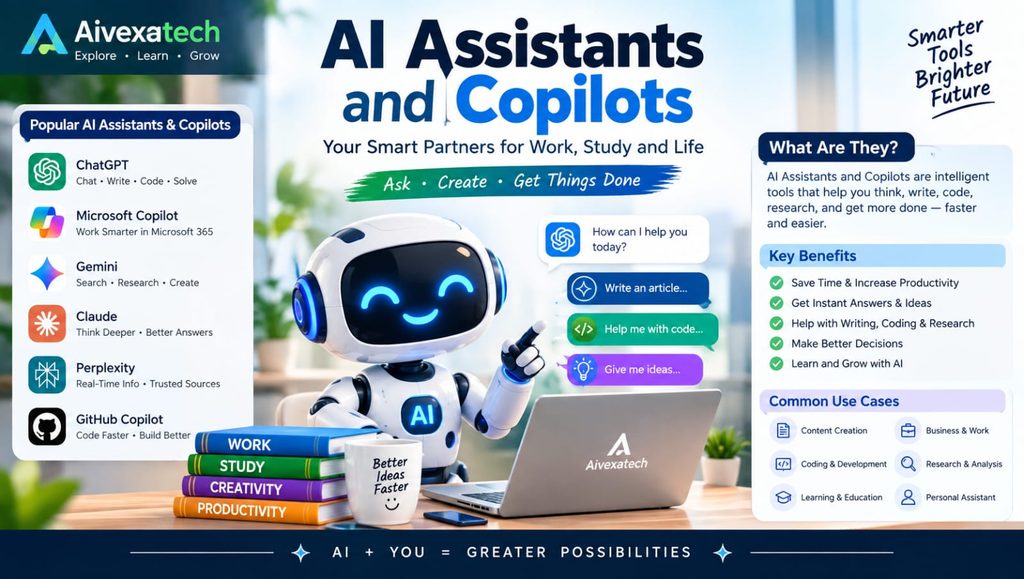
AI automation tools often include AI assistants and AI copilots that help users complete tasks through natural language instructions. These systems can generate information, summarize documents, create drafts, and support everyday decision-making.
Virtual AI assistants can work as digital helpers for professionals and businesses. Intelligent assistants may organize information, prepare responses, manage tasks, and provide AI-powered assistance during regular workflows.
Business copilots are becoming useful in workplaces because they can support different departments. Writing assistants can help with documents, while coding assistants can support software development and technical tasks.
Research assistants can also reduce the time needed to collect and understand information. AI chatbots, conversational AI, and generative AI assistants can provide automated assistance for communication and information-based activities.
Communication and Collaboration
AI automation tools can improve communication by reducing the time required for meetings, emails, and routine messages. AI communication tools can help teams manage information while keeping workplace communication organized.
AI meeting assistants can record discussions and create meeting transcription automatically. Meeting summaries and automated notes make it easier for team members to understand important decisions without reviewing an entire meeting.
Email automation can also improve productivity for professionals who receive large numbers of messages. Email assistants can help draft responses, organize information, and reduce the time spent handling repetitive communication.
Message automation and communication automation can support faster collaboration between teams. Combined with collaborative workflows and document collaboration, these systems can create more efficient workplace processes.
Content and Writing Automation
AI automation tools can significantly speed up writing and content production. AI writing tools can generate drafts, rewrite information, summarize documents, and assist users with different forms of digital content.
AI content generation can support content automation for websites, businesses, and marketing teams. Automated content creation helps users produce first drafts without starting every project from an empty page.
AI copywriting systems can create marketing messages, product descriptions, and promotional material. Text generation can also help users develop ideas and improve existing content.
Content optimization is another important use case. AI editing tools can provide grammar assistance, improve readability, and identify areas that may need revision before publishing.
Blog writing automation can reduce the time required for content teams to prepare articles. Marketing content, social media content, email content, and document generation can all benefit from automated writing workflows.
Data and Information Management
AI automation tools can simplify data-related tasks that traditionally require significant manual effort. AI data analysis can identify patterns, summarize information, and help users understand large datasets more efficiently.
Automated data processing allows information to move through predefined systems with less human involvement. Data automation can help businesses organize records, process documents, and prepare information for further analysis.
Intelligent data management can improve the way companies store and use information. Data extraction systems can collect relevant details from documents, while information processing tools can transform unstructured data into useful formats.
AI-powered analytics can provide faster insights for decision-making. Automated reporting can generate regular reports, while data visualization can make complex information easier to understand.
Business intelligence platforms can combine data insights with predictive analytics. Document processing, AI research, information retrieval, and automated summaries can further reduce the time required to work with large amounts of information.
Marketing and Sales Automation
AI automation tools can help marketing and sales teams automate repetitive activities throughout the customer journey. AI marketing tools can assist with campaign planning, customer targeting, content creation, and performance analysis.
Marketing automation allows businesses to create workflows for recurring promotional activities. Sales automation can handle routine sales processes and help teams spend more time communicating with potential customers.
An AI sales assistant can support lead generation and lead qualification by organizing information about prospects. Customer relationship management systems can use automation to keep customer records updated.
Email marketing automation can send personalized messages based on specific customer actions. Social media automation can also help teams schedule posts and maintain consistent communication across multiple platforms.
Campaign automation can improve marketing workflows by connecting multiple activities. Personalized marketing, customer engagement, automated outreach, and sales productivity can help teams manage larger campaigns with fewer manual steps.
Customer Support Automation
AI automation tools are increasingly used to improve customer service and reduce response times. AI customer support systems can answer common questions and provide assistance without requiring an employee for every interaction.
Customer service automation can handle repetitive requests through AI chatbots and virtual customer assistants. Conversational automation allows customers to communicate naturally while receiving quick responses.
Support ticket automation can organize incoming requests and route them to the appropriate team. Automated responses can provide immediate information for common customer queries and frequently requested solutions.
AI support agents can handle a growing number of support activities. Personalized support can still be provided when automation systems use customer information and previous interactions appropriately.
Customer experience can improve when support workflows are organized and responsive. Help desk automation can reduce repetitive workloads while allowing human employees to focus on complex customer problems.
Integrations and Connected Tools
AI automation tools become more powerful when they can connect different applications. AI tool integrations allow information to move between software platforms without requiring users to copy and paste data manually.
App integrations can connect productivity software, communication platforms, business systems, and other digital services. Software integrations help organizations create connected workflows across their technology stack.
API integrations provide another way to connect applications and exchange information automatically. Third-party integrations can extend the capabilities of automation platforms and allow users to build more customized processes.
Cross-platform automation can synchronize activities between multiple services. Productivity integrations and business software integration can help organizations maintain consistent information across different applications.
Cloud applications can also benefit from automated data transfer and data synchronization. Integrated workflows reduce manual steps and create a more connected digital environment for businesses and professionals.
No-Code and Easy Automation
AI automation tools are becoming easier to use because many platforms now support no-code automation. Users can create workflows without needing advanced programming knowledge or extensive technical experience.
Low-code automation provides additional flexibility for users who need more customization. An automation platform with drag-and-drop automation allows people to visually design workflows using simple building blocks.
Visual automation makes complex processes easier to understand. Automated task creation can trigger actions based on specific conditions, while beginner-friendly AI tools help new users start building useful workflows.
Simple automation can handle everyday activities such as notifications, data transfers, reminders, and content processes. Workflow templates make it easier to start with predefined processes instead of creating everything from scratch.
Customizable workflows allow users to modify automation according to their needs. Automation rules, smart triggers, automated actions, and user-friendly automation software make modern automation accessible to individuals and small businesses.

AI and Generative Technology
AI automation tools are powered by technologies such as artificial intelligence, generative AI, and machine learning. These technologies allow software to understand information, generate content, identify patterns, and perform increasingly complex tasks.
Natural language processing helps systems understand written and spoken instructions. Large language models can generate text, answer questions, summarize information, and support intelligent workflows.
AI-powered software can combine machine learning automation with intelligent systems to improve repetitive processes. Predictive AI can analyze historical information and identify possible outcomes or trends.
Generative technology has also expanded the capabilities of automation platforms. AI algorithms can support content generation, information processing, and automated decision-making in many business and productivity scenarios.
Intelligent agents represent another major development in this field. AI models and AI-driven solutions can perform multi-step tasks while adapting their actions according to instructions, available information, and workflow requirements.
See more:AI automation tools
How to Choose the Right AI Automation Tool
AI automation tools should be selected according to the type of work you want to automate. Before choosing a platform, consider its integrations, ease of use, available features, pricing, security, and compatibility with your existing software.
For simple tasks, no-code automation platforms may be the best option. Businesses with complex requirements may need advanced workflow management, API integrations, data processing, and customized automation capabilities.
It is also important to consider scalability. A tool that works for a small project should ideally continue to support your needs as workflows, users, and business operations grow.
Frequently Asked Questions
1. What are AI automation tools?
AI automation tools are software solutions that use artificial intelligence to automate tasks, workflows, communication, data processing, content creation, and other repetitive activities.
2. Can AI automation save time?
Yes, AI automation tools can save time by handling repetitive tasks automatically. They allow users to reduce manual work and focus on activities that require creativity, judgment, and human interaction.
3. Are AI automation tools suitable for small businesses?
Yes, AI automation tools can be useful for small businesses because they can automate customer support, marketing, sales, communication, reporting, and administrative workflows without requiring a large team.
4. Do AI automation tools require coding?
Many AI automation tools now offer no-code or low-code interfaces. These platforms allow users to build workflows through visual builders, templates, triggers, and automated actions without advanced programming skills.
5. What should I automate first?
Start with repetitive and time-consuming tasks that follow predictable steps. AI automation tools can be particularly useful for email management, data entry, reporting, scheduling, customer questions, content workflows, and routine administrative activities.

