
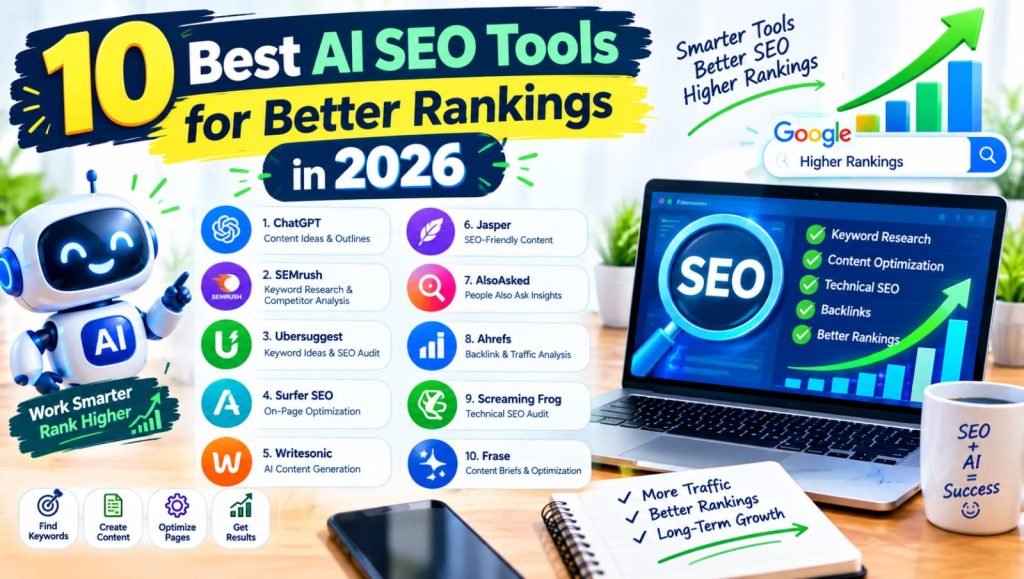
AI SEO Tools are changing how website owners, bloggers, and marketers improve search visibility in 2026. These solutions combine artificial intelligence SEO, machine learning algorithms, natural language processing, and data-driven optimization to make SEO workflows faster and more efficient. From keyword discovery to content optimization, modern platforms can help identify ranking opportunities and automate repetitive tasks.
AI SEO Tools also make it easier to understand search intent, analyze competitors, improve website health, and track performance. Instead of managing every SEO task manually, marketers can use intelligent SEO software to make data-backed decisions, create better content, and build a scalable strategy for long-term organic growth.
AI-Powered SEO Features
Modern AI SEO Tools use generative AI, machine learning algorithms, and natural language processing to understand large amounts of search data. These technologies can identify patterns, recommend optimization opportunities, and provide predictive SEO insights that help marketers respond to changing search behavior.
AI-driven SEO platforms can also automate SEO workflows such as content analysis, keyword suggestions, internal linking, and reporting. Automated SEO workflows reduce repetitive work while AI-powered optimization helps improve productivity, consistency, and overall marketing efficiency.
Keyword Research and Analysis
AI SEO Tools can simplify keyword research by generating keyword suggestions based on topics, competitors, and search intent. They can analyze search volume, keyword difficulty, long-tail keywords, related keywords, and keyword opportunities to help publishers select terms with realistic ranking potential.
Advanced platforms can organize keywords through keyword clustering and semantic keywords. SERP keyword analysis, keyword gap analysis, topical keywords, and low-competition keywords can reveal valuable opportunities that traditional research methods may overlook. This helps create a more focused content strategy.
Content Creation and Optimization
AI SEO Tools are increasingly used for AI content writing, content briefs, and SEO content optimization. They can suggest topics, recommend headings, identify missing concepts, and evaluate content quality before publication. This can make the writing process faster without removing the need for human editing and fact-checking.
An AI content optimizer can also provide content scoring, readability analysis, and improvement recommendations. SEO writing assistants help create optimized blog posts with better topical relevance, semantic relevance, and content freshness while keeping the material useful for readers.
Search Intent and Topic Research
Understanding why people search is essential for successful SEO. AI SEO Tools can analyze user intent and classify searches into informational intent, commercial intent, transactional intent, or navigational intent. This allows writers to create pages that better match what users expect from search results.
Topic research features can identify related subjects and support topic clustering and topical authority. By analyzing search behavior and audience insights, marketers can develop stronger content planning strategies and cover important subjects more comprehensively.

On-Page SEO
AI SEO Tools can review important on-page elements such as SEO title optimization, meta descriptions, H1 tags, H2 headings, keyword placement, and content structure. These recommendations help ensure that important page elements are clear for both search engines and visitors.
On-page optimization can also include internal linking, image optimization, alt text, URL optimization, and readability analysis. When these elements work together, websites can follow SEO best practices while providing a cleaner and more useful experience for readers.
SERP Analysis and Ranking
AI SEO Tools can analyze search engine rankings and identify opportunities within organic search results. SERP analysis may show featured snippets, People Also Ask results, related queries, and other SERP features that competitors are using successfully.
Ranking tracking features monitor Google rankings, search visibility, and position changes over time. By studying competitor rankings and ranking opportunities, website owners can identify pages that need improvement and measure whether their SEO efforts are producing ranking improvements.
Competitor Analysis
AI SEO Tools make SEO competitor analysis easier by examining competitor keywords, competitor content, and SERP competitors. This information can show which subjects competitors cover, which keywords generate visibility, and where a website may have opportunities to create better resources.
Content gap analysis and keyword gap research are especially useful for finding missing topics. Some platforms also analyze competitor backlinks and competitive research data, allowing marketers to benchmark their websites and develop a stronger competitor strategy.
Technical SEO and Website Audits
Technical SEO is another major area where AI SEO Tools can save time. Automated website audits can detect crawl errors, broken links, indexing issues, and problems with site structure. These checks help website owners identify technical issues that could prevent important pages from appearing properly in search results.
Advanced audits may review page speed, Core Web Vitals, mobile optimization, schema markup, structured data, and XML sitemap configuration. Regularly monitoring website health helps maintain a technically sound website and creates a stronger foundation for organic search growth.
Backlink and Link Building
AI SEO Tools can support link building by identifying backlink opportunities, relevant referring domains, and potential link prospects. Backlink analysis can help determine the quality of existing links and reveal websites that may be valuable for future outreach campaigns.
Some platforms provide internal link suggestions and automated internal linking recommendations. Better internal connections help search engines discover related pages while supporting navigation. For off-page SEO, link prospecting, link outreach, and authority building can contribute to stronger website credibility over time.
SEO Performance and Analytics
AI SEO Tools can bring SEO analytics into a single workflow by monitoring organic traffic, traffic growth, search performance, and important SEO metrics. Marketers can use these insights to understand which pages attract visitors and which content needs additional optimization.
Some solutions support Google Search Console data, Google Analytics integration, conversion tracking, and automated reporting. Real-time insights and ROI tracking make it easier to connect SEO activity with business outcomes and determine which strategies are delivering meaningful results.
Popular AI SEO Tool Capabilities
AI SEO Tools now combine multiple capabilities in one platform. Some of the most popular options for 2026 include Semrush, Ahrefs, Surfer, Frase, SE Ranking, Scalenut, Clearscope, Alli AI, Rank Math, and OutRanking. Each platform focuses on different combinations of content optimization, keyword research, technical SEO, or automation.
Semrush and Ahrefs are well known for keyword research, competitor analysis, backlink data, and SEO performance features. Surfer and Clearscope focus strongly on content optimization, while Frase combines content research with optimization. SE Ranking provides broader SEO management, and Scalenut focuses on AI-assisted content workflows.
Alli AI emphasizes automated SEO changes, while Rank Math provides WordPress-focused optimization features. OutRanking combines content planning, research, and optimization. When choosing among these platforms, compare their keyword databases, auditing capabilities, content features, integrations, pricing, and ease of use rather than selecting a tool only because it has more features.
AI Models and Advanced SEO Technology
AI SEO Tools increasingly rely on large language models and LLM-powered SEO technology to understand context rather than simply matching individual keywords. ChatGPT for SEO, generative search, and semantic search are influencing how content is researched, created, and optimized.
New concepts such as AI Overviews, answer engine optimization, AEO, and GEO are becoming important as search experiences become more conversational. Retrieval augmented generation, entity optimization, and knowledge graphs can help systems connect content with entities, concepts, and reliable information.
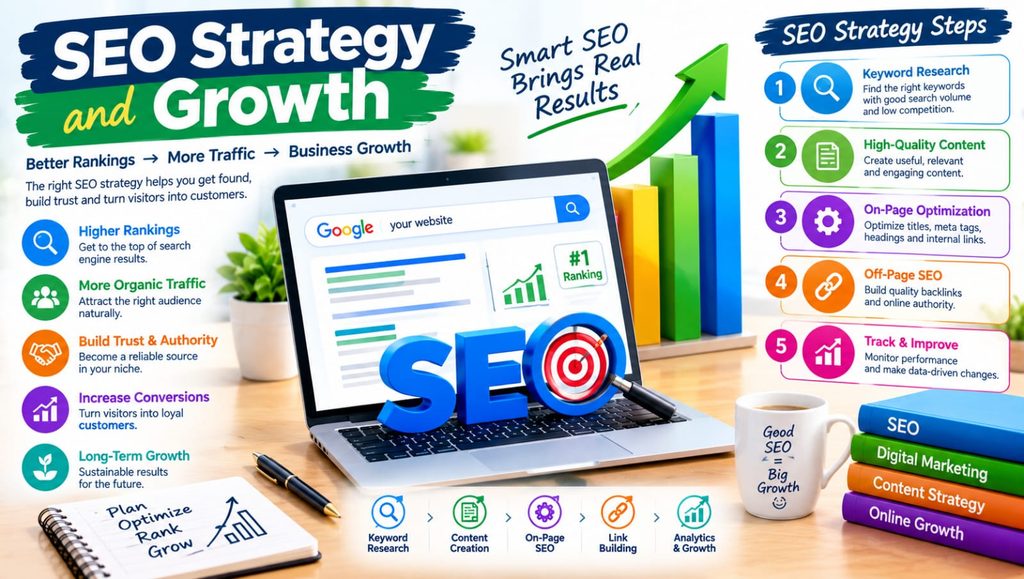
SEO Strategy and Growth
AI SEO Tools can support a complete SEO strategy by helping websites plan scalable content and identify opportunities for organic growth. Programmatic SEO can be useful for websites with large amounts of structured information, while content marketing can strengthen topical coverage and website authority.
Automation can also improve SEO productivity by reducing time spent on repetitive research and reporting. With better data-backed decisions, marketers can prioritize pages that have the strongest potential instead of applying identical optimization methods to every page.
User Experience and Content Quality
AI SEO Tools should not be used only to satisfy search algorithms. User experience, content accuracy, factual accuracy, and content relevance remain essential for building sustainable organic visibility. High-quality pages should answer questions clearly, provide useful information, and avoid unnecessary repetition.
E-E-A-T, including expertise, experience, authoritativeness, and trustworthiness, can help guide content quality decisions. Readability, user engagement, bounce rate, and dwell time can provide additional signals about how visitors interact with content. Human review is still important because AI-generated recommendations can contain errors or lack the experience required for specialized topics.
See more:AI SEO Tools
How to Choose the Right AI SEO Tool
The best AI SEO Tools depend on your website size, SEO goals, technical knowledge, and content strategy. A small blog may benefit most from affordable keyword research and content optimization, while a large website may need advanced audits, rank tracking, backlink analysis, and automation.
Before choosing a platform, check its keyword database, competitor research features, content tools, technical audit capabilities, integrations, reporting options, and pricing. It is also useful to test whether its recommendations actually improve your workflow instead of adding unnecessary complexity.
FAQs
1. What are AI SEO tools?
AI SEO tools are software platforms that use artificial intelligence, machine learning, and data analysis to support SEO tasks such as keyword research, content optimization, competitor analysis, technical audits, and ranking tracking.
2. Which AI SEO tool is best for beginners?
The best choice depends on your needs and budget. Beginners should generally look for an easy-to-use platform with keyword research, on-page recommendations, content optimization, and clear reporting.
3. Can AI SEO tools improve Google rankings?
They can help identify optimization opportunities and improve SEO workflows, but no tool can guarantee rankings. Search performance also depends on content quality, competition, authority, technical health, relevance, and user experience.
4. Are AI SEO tools useful for content writing?
Yes. Many platforms can create content briefs, suggest topics, analyze competitors, recommend keywords, and provide optimization suggestions. However, human editing and fact-checking remain important for high-quality content.
5. Should I use one AI SEO tool or multiple tools?
One all-in-one platform may be enough for many websites. However, using specialized tools can be useful when you need deeper capabilities in areas such as backlinks, technical SEO, content optimization, or rank tracking.

