
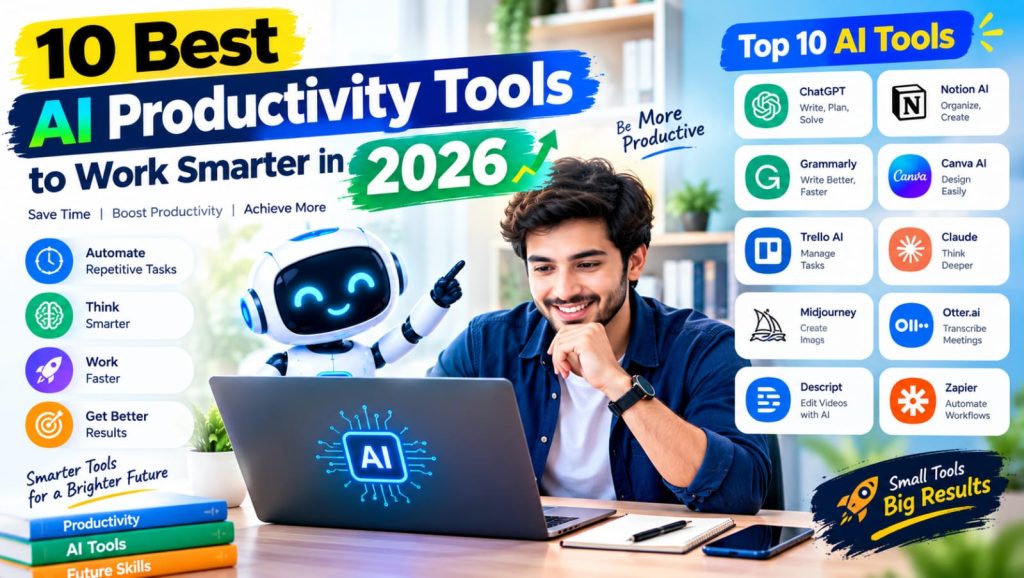
AI Productivity Tools are changing how people manage tasks, create content, organize information, and complete everyday work in 2026. From writing and research to scheduling and automation, these tools can reduce manual effort and help users complete work more efficiently.
AI Productivity Tools also make it easier to automate repetitive processes and manage complex workflows. Whether you are a freelancer, student, marketer, business owner, or part of a remote team, the right AI-powered software can improve focus, organization, and overall work efficiency.
AI Productivity Tools
AI Productivity Tools combine artificial intelligence with productivity software to help users complete tasks faster. These solutions can provide AI assistants, smart recommendations, task automation, content generation, and workflow optimization.
Modern AI Productivity Tools support both personal productivity and business productivity. They can help employees organize information, automate repetitive work, manage projects, and improve daily workflows without requiring advanced technical skills.
The best tools are designed to save time while keeping users in control. Features such as natural language prompts, intelligent software, and automated assistance make productivity apps easier to use.
AI Automation and Workflow Management
AI Productivity Tools can automate repetitive tasks that normally require manual effort. Workflow automation can connect different applications and trigger actions automatically when specific conditions are met.
AI Productivity Tools can also support no-code and low-code automation. Users can create multi-step workflows, connect apps, organize processes, and reduce unnecessary administrative work.
AI agents are making workflow management even more powerful. Intelligent automation can handle certain tasks across connected applications, helping businesses improve process management and productivity automation.
AI Assistants and Chatbots
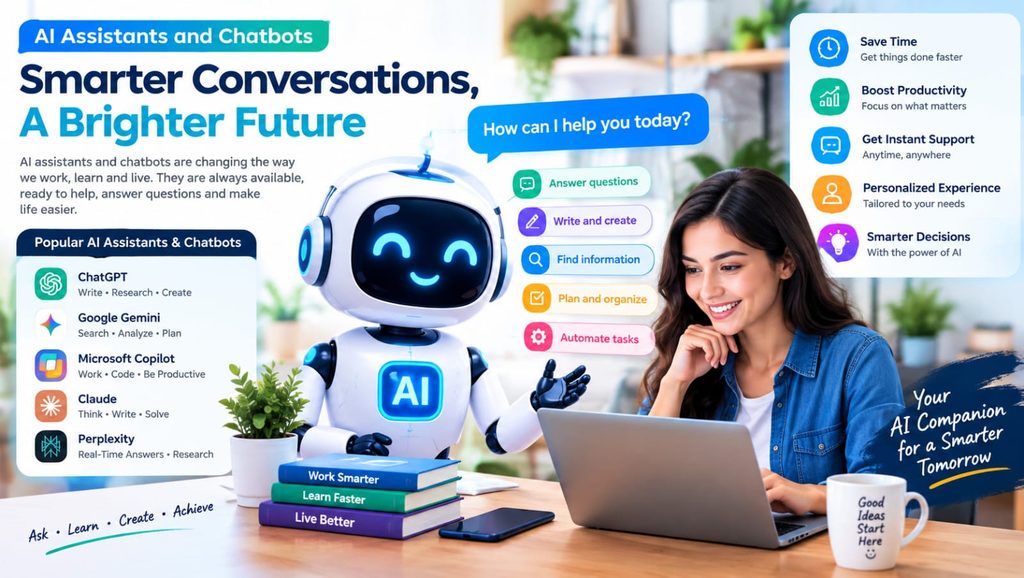
AI Productivity Tools often include AI assistants that can answer questions, generate ideas, summarize information, and provide personalized assistance. These virtual assistants can act like digital coworkers for everyday tasks.
AI Productivity Tools powered by large language models can understand natural language and respond to detailed instructions. Users can ask for help with planning, writing, research, brainstorming, and problem-solving.
Modern AI assistants can also provide contextual understanding. Their reasoning capabilities allow them to support more complex workflows and provide useful recommendations based on the information provided.
Content Creation and Writing
AI Productivity Tools are widely used for content creation and writing. AI writing tools can help users create blog posts, emails, marketing copy, social media content, summaries, and other written materials.
AI Productivity Tools can also support proofreading, grammar checking, rewriting, and editing. This makes writing assistants useful for professionals who need to produce high-quality content quickly.
Content generators can provide ideas and templates for different writing tasks. Users can then review and customize the generated content to match their goals, audience, and preferred style.
Task and Project Management
AI Productivity Tools can improve task management by organizing to-do lists, deadlines, projects, and workloads. Smart task lists can help users identify important activities and keep projects organized.
AI Productivity Tools can also support task prioritization and project planning. Automated task management can help teams track responsibilities and identify work that needs attention.
Project workflows become easier to manage when tasks, deadlines, and team collaboration are connected in one system. This can improve project tracking and reduce missed deadlines.
AI Scheduling and Time Management
AI Productivity Tools can make scheduling easier by analyzing calendars, availability, meetings, and priorities. Smart scheduling can automatically identify suitable times for appointments and meetings.
AI Productivity Tools can also support time blocking and daily planning. Users can organize their schedules around important tasks while reducing unnecessary calendar conflicts.
Automated scheduling can save time for teams that regularly coordinate meetings. Availability management and workload balancing can also make daily work more organized.
Meeting and Transcription Tools
AI Productivity Tools can automatically convert conversations into written meeting notes. Meeting transcription uses speech-to-text technology to capture discussions during virtual or in-person meetings.
AI Productivity Tools can generate meeting summaries, key takeaways, and action items. Instead of manually writing everything down, users can focus on the conversation and review the important points later.
Meeting assistants may also provide speaker identification and conversation insights. These features can help teams remember decisions, responsibilities, and follow-up tasks more accurately.
Email and Communication Productivity
AI Productivity Tools can make email management faster by helping users draft, summarize, organize, and prioritize messages. Email assistants can reduce the time spent handling busy inboxes.
AI Productivity Tools can generate smart replies and personalized emails based on the context of a conversation. They can also help users prepare follow-up messages and improve business communication.
Email automation can organize incoming messages and highlight important information. This allows professionals to focus on high-priority communication instead of spending hours sorting their inbox.
AI Research and Information Management
AI Productivity Tools can simplify research by helping users search for information, analyze sources, and create research summaries. AI-powered search can provide more contextual results than traditional keyword-based searches.
AI Productivity Tools can also support knowledge management and document analysis. Users can organize information, explore knowledge bases, and retrieve relevant details more efficiently.
Deep research and information retrieval features can reduce the time required to investigate complex topics. However, important information should still be checked against reliable sources before making decisions.
AI Presentation and Visual Content Tools
AI Productivity Tools can help users create professional presentations without designing every slide manually. Presentation generators can turn written ideas into structured slide decks.
AI Productivity Tools can assist with presentation design, slide generation, templates, visual storytelling, and branded presentations. This can be particularly useful for business meetings, education, and marketing.
AI image generation and editing features can also support visual content creation. Users can create graphics and other visual assets more quickly while maintaining a consistent presentation style.
AI Video, Audio, and Voice Tools
AI Productivity Tools can simplify video and audio production through automated editing, transcription, voice generation, and text-to-speech features.
AI Productivity Tools can create AI voiceovers and convert written scripts into spoken audio. These features are useful for presentations, educational content, marketing videos, and social media production.
AI video generation can also accelerate content production. Instead of manually completing every editing step, users can automate parts of the multimedia creation process.
AI Productivity for Teams and Businesses
AI Productivity Tools can improve team productivity by automating business workflows and reducing repetitive administrative tasks. Employees can use intelligent software to organize projects, communicate, and manage information.
AI Productivity Tools can also support enterprise AI and workplace automation. Businesses can connect productivity platforms with existing systems to improve operational efficiency.
Remote teams can benefit from collaborative tools that simplify communication and project tracking. AI-powered assistance can help employees stay organized while working across different locations.
AI Productivity for Marketing and Social Media
AI Productivity Tools can help marketers create content, manage campaigns, and schedule social media posts. Marketing automation can reduce the time required for repetitive campaign activities.
AI Productivity Tools can generate social media content, advertising copy, content ideas, and marketing workflows. These features can help teams maintain a consistent publishing schedule.
Audience research and marketing analytics can also support better decisions. By combining automation with human creativity, marketers can improve customer engagement and manage campaigns more efficiently.
Data Analysis and Decision-Making
AI Productivity Tools can simplify data analysis by processing information and identifying useful patterns. Automated analysis can help users understand spreadsheets, reports, and large datasets.
AI Productivity Tools can support data visualization, predictive analytics, and automated reporting. Business intelligence features can turn complex information into easier-to-understand insights.
Decision support tools can help organizations make data-driven decisions. Human judgment remains important, but AI analytics can reduce the time required to find relevant information.

Integrations and Connected Productivity
AI Productivity Tools become more useful when they connect with other applications. App integrations can allow information to move between calendars, communication platforms, project management systems, and other software.
AI Productivity Tools can create connected workflows through APIs and third-party integrations. Automated data transfer can reduce the need to copy information manually between different applications.
A connected productivity ecosystem can centralize important information and streamline daily work. This can help businesses create a more efficient technology stack.
Productivity, Efficiency, and Time Savings
AI Productivity Tools are designed to help users save time and improve productivity. By automating repetitive tasks, these solutions allow people to spend more time on creative and strategic activities.
AI Productivity Tools can reduce manual work and streamline workflows. Faster processes can improve focus, reduce workload, and help users complete important tasks more efficiently.
The biggest benefit is not simply working faster. Smart productivity technology can help people organize priorities, eliminate unnecessary steps, and build more efficient work processes.
See more:AI Productivity Tools
AI Agents and Autonomous Workflows
AI Productivity Tools are increasingly incorporating AI agents that can perform multiple steps with limited human intervention. These autonomous agents can execute tasks, make decisions, and interact with connected applications.
AI Productivity Tools with agentic AI can support autonomous workflows and multi-step tasks. AI coworkers and digital workers can potentially handle routine operations while people focus on higher-value responsibilities.
AI agent builders also allow organizations to create specialized workflow agents. These systems can automate certain operations, but users should still monitor important tasks and decisions.
FAQs
1. What are AI Productivity Tools?
AI Productivity Tools are software applications that use artificial intelligence to help users automate tasks, create content, manage projects, organize information, analyze data, and improve work efficiency.
2. How can AI Productivity Tools save time?
AI Productivity Tools can save time by automating repetitive tasks, generating content, summarizing information, organizing emails, scheduling meetings, analyzing data, and supporting multi-step workflows.
3. Are AI productivity tools useful for businesses?
Yes. AI Productivity Tools can help businesses improve team collaboration, automate workflows, manage projects, analyze information, support marketing activities, and reduce repetitive administrative work.
4. Can AI productivity tools replace human workers?
AI Productivity Tools are generally better viewed as assistance and automation technologies rather than complete replacements for people. Human creativity, judgment, communication, and oversight remain important for many tasks.
5. What should I look for in an AI productivity tool?
When choosing AI Productivity Tools, consider ease of use, automation features, integrations, security, pricing, reliability, customization, AI capabilities, and whether the tool fits your specific workflow.

