
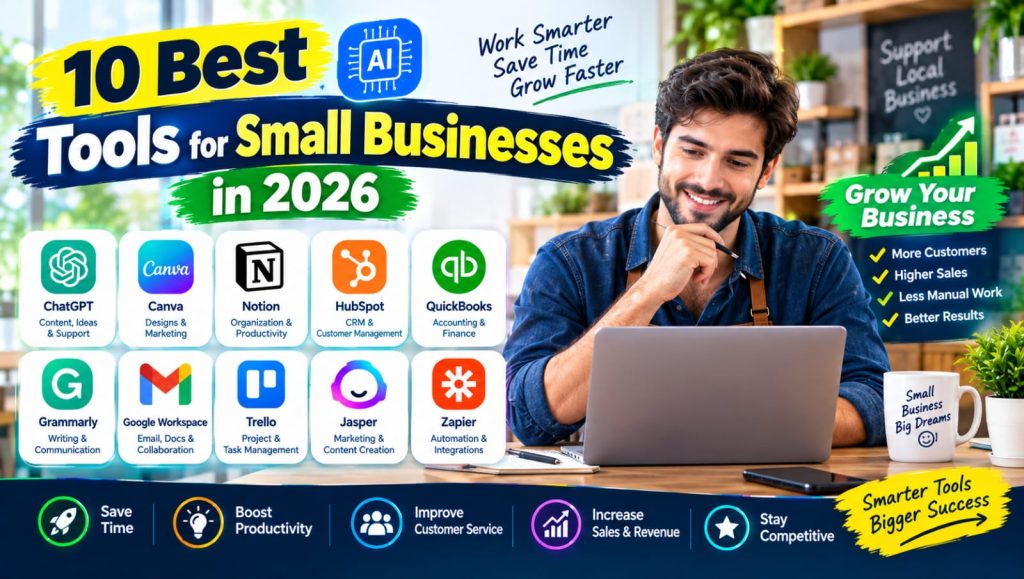
AI tools for small businesses are becoming an important part of modern business operations. They help owners manage marketing, customer service, sales, communication, research, and repetitive tasks without requiring a large team.
In 2026, AI software for small businesses can help companies save time and improve productivity. From AI-powered business tools to workflow automation, these solutions can support daily operations and create more efficient business processes.
AI Tools for Small Businesses & Business Automation
AI tools for small businesses can automate repetitive activities and simplify everyday operations. AI business tools use artificial intelligence for small businesses to support tasks such as document creation, data organization, scheduling, and communication. Small business AI solutions can also connect different applications through automated workflows.
Business automation tools can reduce manual work and improve business efficiency. AI automation, workflow automation, and automated business processes allow companies to create AI-powered workflows that handle routine activities. No-code automation and low-code tools also make automation accessible to business owners without advanced technical skills.
AI Marketing & Content Creation
AI tools for small businesses can support marketing teams with faster content production and campaign planning. AI marketing tools, AI content creation platforms, and AI content generators can help create blog content, social media content, product descriptions, and other marketing materials.
AI writing tools and AI copywriting software can also support email marketing and social media marketing. Businesses can use marketing automation for campaigns, ad copy, brand messaging, and customer engagement while maintaining a consistent content strategy across different channels.
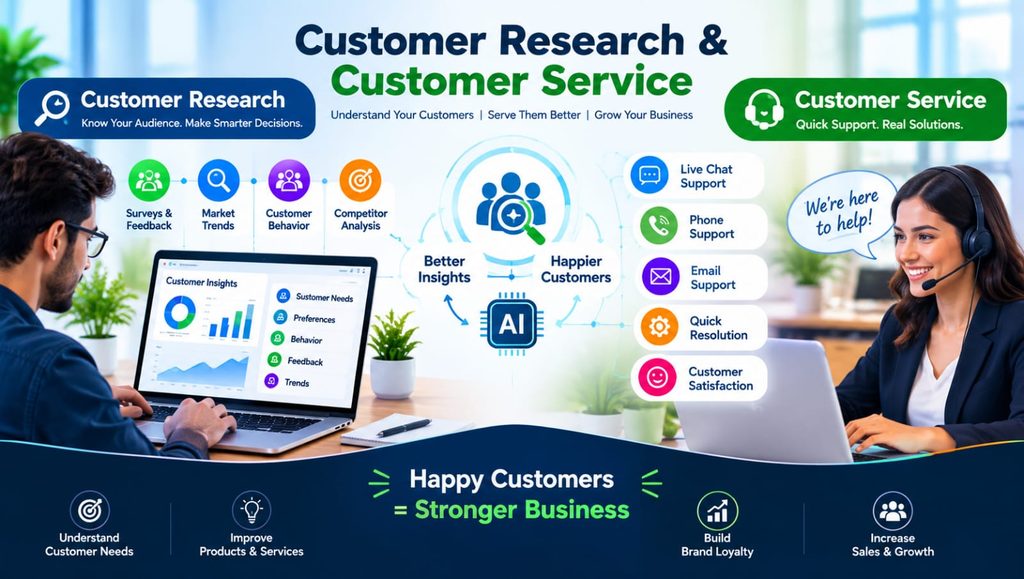
Customer Research & Customer Service
AI customer service solutions can help businesses respond to customer questions more efficiently. AI customer support platforms and AI chatbots can provide automated customer responses, organize customer communication, and support chatbot automation for common requests.
Customer research tools can analyze customer feedback analysis, customer data, and customer insights. CRM automation can help organize customer relationship management, lead management, and customer retention activities while giving businesses a clearer view of the customer experience.
Sales & Lead Generation
AI tools for small businesses can help sales teams find and manage potential customers. AI sales tools and an AI sales assistant can support lead generation, lead qualification, prospect research, and sales pipeline management, making it easier to organize business leads.
Sales automation can also improve sales follow-up and personalized outreach. Automated follow-ups, email outreach, and sales workflows can reduce repetitive work while supporting sales productivity, conversion optimization, and customer acquisition.
AI Productivity & Time Management
AI productivity tools can help business owners manage repetitive tasks and routine tasks more efficiently. Productivity automation can assist with administrative tasks, task automation, scheduling, document handling, and other daily business tasks that consume valuable time.
AI assistants and virtual AI assistants can also support time management and smart task management. Automated workflows allow employees to focus on more important responsibilities, while work automation and productivity software can contribute to better employee productivity.
AI Email & Communication Tools
AI tools for small businesses can improve the way companies manage professional communication. AI email tools and an AI email assistant can support email drafting, email personalization, inbox management, and automated email responses for common business situations.
Email automation can organize email workflows and customer emails while helping businesses manage follow-ups. These tools can improve email productivity and make automated communication more consistent without requiring employees to manually write every message.
Business Research & Decision Making
AI business research tools can help companies collect and organize useful information. Market research, competitive research, audience research, and customer insights can provide valuable information about customer needs and market trends.
AI analytics and business intelligence platforms can process data and support data-driven decisions. AI tools for small businesses can assist with business analysis, research automation, business strategy, and decision-making tools, helping owners understand important business insights.
Website, App & No-Code Business Tools
AI website builders make it easier for small companies to create a professional business website. AI website builder platforms can support landing page creation, website content generation, and basic AI web development without requiring advanced programming knowledge.
AI app builders and no-code app development platforms can also create useful digital business tools. No-code tools allow entrepreneurs to build custom business applications and online business tools through app development without coding, which can be useful for growing companies.
Finance & Business Operations
AI tools for small businesses can simplify several financial and operational activities. AI accounting tools can support financial management, expense tracking, invoice automation, bookkeeping automation, and financial analysis while reducing repetitive administrative work.
Business operations can also benefit from inventory management and automated reporting. AI systems can support cash flow management, business reporting, operational workflows, resource management, and business planning, helping companies organize important operational information.
AI Tools for Solopreneurs & Small Teams
AI for solopreneurs can provide support across multiple areas of a one-person business. AI for entrepreneurs can assist with content creation, customer communication, research, administration, and marketing, allowing independent business owners to manage different responsibilities more efficiently.
For small teams, entrepreneurial tools can support startup automation and lean business operations. AI-powered entrepreneurship can help create scalable business systems while an AI business assistant can support daily activities, business growth tools, and digital entrepreneurship.
Business Growth & Efficiency
AI tools for small businesses can help companies improve business efficiency while reducing repetitive work. AI business growth solutions can support operational automation, cost-saving tools, process improvement, and productivity improvement through automated systems.
Business optimization can also involve digital transformation and AI adoption. Smart business solutions can help companies build efficient business processes, improve productivity, and explore growth automation as their operations become larger and more complex.
AI Integration & Connected Workflows
AI integrations allow different applications to work together through connected workflows. Business software integration can connect CRM integrations, email integrations, productivity integrations, and app integrations so information can move between systems with less manual effort.
AI workflow automation can create automated workflow systems that connect different parts of a business. Third-party integrations and automated data transfer can strengthen the business technology stack and create integrated business tools that support AI-powered systems.
Security, Privacy & Responsible AI
AI security is important when businesses use AI platforms to process company or customer information. Business data security, data privacy, and customer data protection should be considered before connecting sensitive information to any AI service.
Secure AI tools should provide appropriate privacy and access controls for business users. Responsible AI also involves AI governance, data management, business information security, and secure customer communication. Privacy-focused business tools can help companies use automation while paying attention to data protection.
10 Best AI Tools for Small Businesses in 2026
| AI Tool | Main Purpose | Best Use |
|---|---|---|
| ChatGPT | AI assistance and content | Writing, research, productivity |
| Zapier | Workflow automation | Connecting business apps |
| Canva | AI design and content | Marketing and social media |
| HubSpot | CRM and automation | Sales and customer management |
| Microsoft Copilot | Productivity assistance | Business and office tasks |
| Google Gemini | AI research and productivity | Research and content |
| Grammarly | AI writing | Business communication |
| QuickBooks | Financial management | Accounting and bookkeeping |
| Mailchimp | Email marketing | Email campaigns |
| Shopify Magic | Ecommerce AI | Online business management |
These platforms cover different business needs, so companies should select tools according to their workflows. For example, a marketing-focused business may need content and social media tools, while a service company may focus more on customer support, CRM automation, and communication.
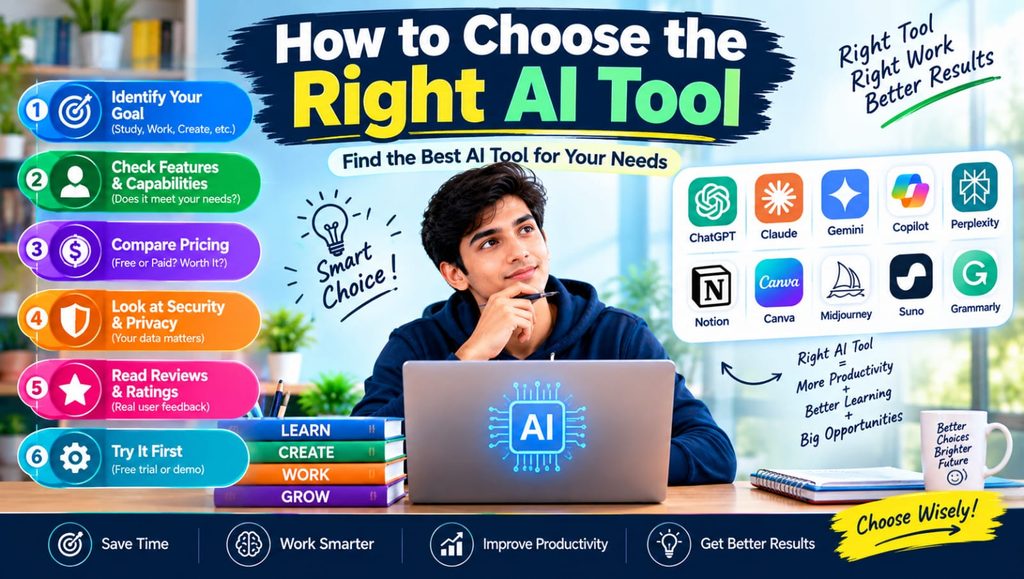
Before choosing a platform, businesses should compare pricing, features, integrations, security, privacy controls, and ease of use. Testing one workflow first can help determine whether an AI solution fits the company’s existing technology stack.
How to Choose the Right AI Tool
AI tools for small businesses should be selected according to a specific business problem rather than simply following an AI trend. Owners can first identify repetitive tasks, communication problems, marketing needs, customer service issues, or administrative work that could benefit from automation.
It is also important to check whether a tool integrates with existing software. A useful platform should fit the business workflow and provide appropriate security controls. Starting with a small project allows businesses to evaluate accuracy, productivity improvements, and overall usability before expanding.
Benefits of Using AI in Small Businesses
AI tools for small businesses can help reduce repetitive work and give employees more time for important activities. Marketing automation, sales automation, customer service, and productivity systems can make daily operations more organized.
AI can also help small companies handle larger workloads with existing resources. Automated workflows can support customer communication, content production, research, reporting, and administrative tasks, making it easier for businesses to improve efficiency as they grow.
See more:AI tools for small businesses
Challenges of AI Adoption
AI adoption also requires careful planning. Businesses should consider data privacy, security, accuracy, employee training, integration requirements, and the possibility of incorrect AI-generated information before automating important processes.
Cost is another factor for small companies. Instead of adopting many platforms at once, businesses can begin with one or two tools that solve clear problems. Monitoring results can help determine whether a particular AI solution is providing meaningful value.
Frequently Asked Questions
1. What are AI tools for small businesses?
They are software solutions that use artificial intelligence to help businesses with tasks such as marketing, customer service, sales, research, communication, productivity, and automation.
2. Can AI help a small business save time?
Yes. AI can automate repetitive tasks such as email drafting, content creation, data organization, customer responses, research, and administrative work.
3. Are AI tools suitable for solopreneurs?
Yes. Solopreneurs can use AI assistants, content tools, email tools, research platforms, and automation software to manage multiple business activities with fewer manual tasks.
4. Are AI tools expensive?
Pricing varies by platform. Some services offer free versions, while advanced features may require paid plans. Businesses should compare pricing with the features and time savings provided.
5. How can a small business start using AI?
Start with one repetitive task that takes significant time. Choose a suitable AI solution, test the workflow, review its results, and gradually expand automation when the process is reliable.

