
AI Tools for SEO and Content Optimization are changing the way website owners, bloggers, marketers, and SEO professionals research keywords and improve online content. These tools can analyze search results, discover valuable topics, generate content ideas, identify optimization opportunities, and provide useful recommendations for better search visibility.
AI Tools for SEO and Content Optimization can also reduce repetitive SEO tasks and make content workflows more efficient. From keyword research and competitor analysis to on-page SEO, semantic optimization, technical audits, and performance tracking, AI-powered platforms can help businesses build a more organized and data-driven SEO strategy.
Keyword Research & Search Intent
AI Tools for SEO and Content Optimization make keyword research easier by generating keyword suggestions, related keywords, long-tail keywords, and new keyword discovery opportunities. Many platforms analyze search volume, keyword difficulty, competition, and search intent to help users choose terms with realistic ranking potential. Keyword clustering and keyword mapping can also organize related terms into topic clusters, making it easier to create pages around specific subjects.
AI Tools for SEO and Content Optimization can help identify whether a search query has informational, commercial, or transactional intent. Understanding user intent is important because a page should provide the type of information searchers actually expect. AI systems can examine ranking pages and search patterns to reveal content opportunities, semantic keywords, and related queries that may help create more relevant and complete articles.
Content Optimization & Content Strategy
AI Tools for SEO and Content Optimization can improve content optimization by analyzing article structure, content quality, topical relevance, and content depth. They can generate content briefs, SEO content briefs, recommendations, and ideas based on competing pages. This helps writers understand which sections and concepts should be included before beginning the writing process.
AI Tools for SEO and Content Optimization also support long-term content strategy and planning. They can identify content gaps, suggest content updates, and help websites develop stronger topical authority. Instead of publishing unrelated articles, website owners can use these insights to build connected topic clusters and improve the overall relevance of their website.
AI Content Generation & Writing
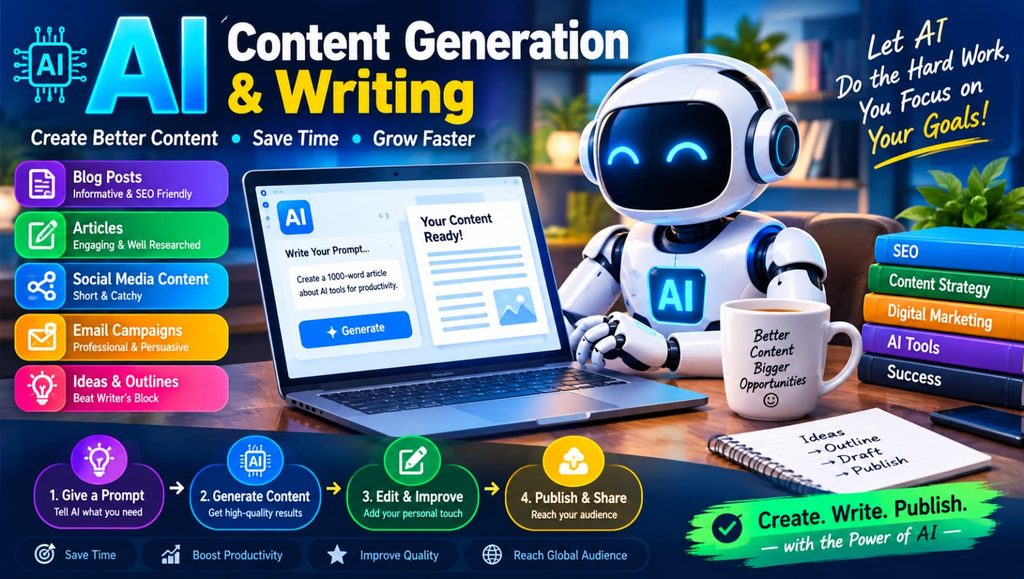
AI Tools for SEO and Content Optimization can assist with content creation through AI content generators, AI writing tools, article generation, and SEO writing features. Writers can use these systems to develop outlines, blog posts, website content, marketing content, and content ideas. They can also provide writing assistance when users need help expanding or rewriting an existing section.
AI Tools for SEO and Content Optimization can make automated content creation faster, but human editing remains important. AI-generated content should be reviewed for factual accuracy, originality, usefulness, and relevance before publication. Content rewriting, expansion, and summarization can save time, while human expertise ensures the final article provides genuine value to readers.
On-Page SEO & Content Analysis
AI Tools for SEO and Content Optimization can analyze important on-page SEO elements such as title tags, meta descriptions, headings, URLs, keyword placement, keyword density, and internal linking. These systems can identify potential problems and provide SEO recommendations that help improve page structure. They can also analyze content formatting and readability to make pages easier to understand.
AI Tools for SEO and Content Optimization can also support image optimization and alt text recommendations. Proper headings, descriptive URLs, relevant internal links, useful images, and readable formatting can create a stronger user experience. AI content analysis can bring these elements together and help website owners identify areas where a page may require additional optimization.
SERP & Competitor Analysis
AI Tools for SEO and Content Optimization can perform SERP analysis and search results analysis to show how top-ranking pages approach a particular topic. Competitor content analysis can reveal common topics, content structures, competitor keywords, ranking pages, and potential ranking factors. This information helps writers understand what successful pages are doing well.
AI Tools for SEO and Content Optimization can also help identify SERP competitors and important search features such as featured snippets. By comparing top-ranking content, marketers can discover opportunities to create more useful and comprehensive pages. Competitive analysis can therefore become an important part of content planning and search visibility strategies.
See more:10 Best AI Tools for SEO and Content Optimization
Semantic Search & Topic Optimization
AI Tools for SEO and Content Optimization are useful for semantic SEO because modern search engines focus heavily on meaning, context, and relationships between concepts. Natural language processing and topic modeling can help identify related concepts, contextual keywords, content entities, and related terms that are relevant to a subject.
AI Tools for SEO and Content Optimization can improve semantic relevance by showing whether an article covers the important aspects of a topic. Strong topic coverage can help search engines better understand the subject of a page. Instead of repeatedly inserting one keyword, writers can create comprehensive content with related entities, contextual information, and natural language.
Technical SEO & Website Performance
AI Tools for SEO and Content Optimization can support technical SEO by identifying website health problems through website SEO audits and site audits. AI-powered analysis can help detect broken links, indexing issues, crawl problems, page-speed concerns, mobile optimization problems, and other technical weaknesses that may affect website performance.
AI Tools for SEO and Content Optimization can also help review Core Web Vitals, structured data, schema markup, XML sitemaps, robots.txt files, and canonical tags. These technical elements can influence how search engines crawl, understand, and index a website. Regular technical analysis helps website owners discover problems before they negatively affect organic search performance.
Analytics, Tracking & SEO Performance
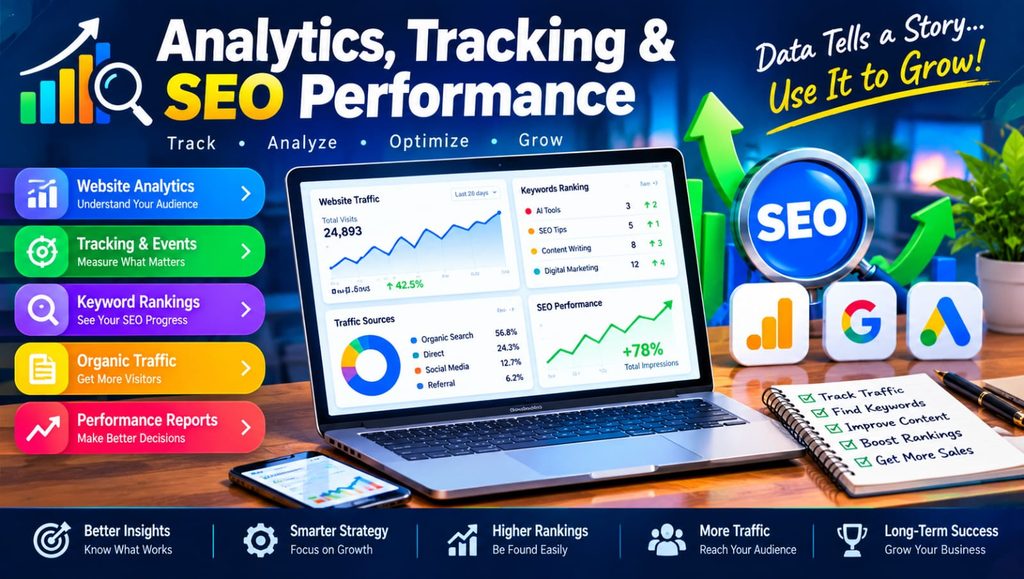
AI Tools for SEO and Content Optimization can simplify SEO analytics by monitoring organic traffic, search traffic, keyword rankings, ranking positions, impressions, click-through rate, and conversions. By bringing important SEO metrics together, these platforms can help website owners understand which pages are performing well and which pages require additional attention.
AI Tools for SEO and Content Optimization can also improve performance tracking through SEO dashboards and reporting features. Data from sources such as Google Search Console can help users evaluate traffic growth, ranking changes, CTR, and content performance. Regular monitoring makes it easier to measure progress and adjust an SEO strategy when results change.
AI-Powered SEO Automation
AI Tools for SEO and Content Optimization can automate repetitive SEO tasks such as automated keyword research, content auditing, optimization analysis, and content recommendations. Automation can save time for marketers who manage large websites or multiple content projects. Instead of manually reviewing every page, AI systems can quickly analyze large amounts of information and highlight important issues.
AI Tools for SEO and Content Optimization can also support scalable SEO through workflow automation, bulk optimization, and automated SEO analysis. These capabilities can increase productivity and time savings while allowing teams to manage larger content operations. However, automated recommendations should always be reviewed before major changes are made to important website pages.
See more:AI Tools for SEO and Content Optimization
Content Quality, Readability & Engagement
AI Tools for SEO and Content Optimization can help improve content readability by identifying unclear sentences, complicated wording, poor formatting, and areas that may be difficult for readers. Readability scores can give writers a general indication of how accessible their content is. Clear writing, useful headings, short paragraphs, and logical formatting can improve the reading experience.
AI Tools for SEO and Content Optimization can also support helpful content by identifying missing information and opportunities to make articles more comprehensive. Content originality, factual accuracy, freshness, expertise, and trustworthiness remain important considerations. AI should assist the writing process while human editors verify information and ensure the content genuinely meets audience needs.
Content Gap & Optimization Opportunities
AI Tools for SEO and Content Optimization can perform content gap analysis to discover keyword gaps, competitor gaps, missing topics, topical gaps, and other content opportunities. Comparing your pages with ranking competitors can reveal subjects that your website does not cover adequately. These insights can help create new articles or improve existing pages.
AI Tools for SEO and Content Optimization can also identify underperforming content that may benefit from a content refresh. Outdated information, missing sections, weak keyword targeting, and poor topical coverage can reduce a page’s potential. By finding optimization opportunities, website owners can prioritize content improvement instead of constantly creating new pages.
AI SEO Reporting & Recommendations
AI Tools for SEO and Content Optimization can generate SEO reports containing keyword reports, ranking reports, traffic reports, competitor reports, and other useful performance information. Automated SEO reports can reduce manual reporting work and provide a clearer overview of website progress. SEO monitoring also helps identify important changes in rankings and organic traffic.
AI Tools for SEO and Content Optimization can turn SEO data into actionable SEO recommendations and performance insights. Instead of simply showing numbers, advanced platforms can highlight areas that need improvement and suggest possible actions. SEO progress tracking becomes easier when keyword rankings, traffic, content performance, and optimization recommendations are available in one workflow.
10 Best AI Tools for SEO and Content Optimization
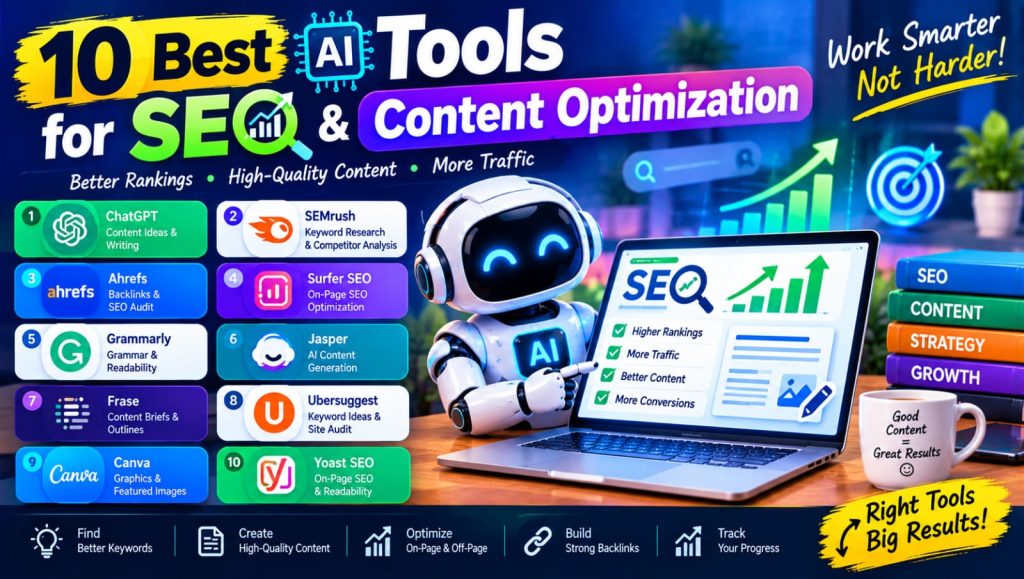
AI Tools for SEO and Content Optimization are available across different platforms, and each tool has different strengths. Popular options include Semrush for comprehensive SEO research, Ahrefs for keyword and competitor research, Surfer for content optimization, Frase for content research and briefs, Scalenut for SEO content workflows, Jasper for AI writing, Clearscope for content optimization, MarketMuse for content intelligence, SE Ranking for SEO monitoring, and NeuronWriter for semantic content optimization.
AI Tools for SEO and Content Optimization should be selected according to your website’s specific requirements. A blogger may prioritize keyword research and content optimization, while a larger business may need technical SEO, competitor analysis, reporting, and automation. Comparing features before choosing a platform can help you avoid paying for unnecessary tools and build a more efficient SEO workflow.
Conclusion
AI Tools for SEO and Content Optimization can make modern SEO faster, more organized, and more data-driven. They can assist with keyword research, search intent, content strategy, AI writing, on-page SEO, SERP analysis, semantic optimization, technical SEO, analytics, content gaps, and reporting.
AI Tools for SEO and Content Optimization should be treated as assistants rather than complete replacements for human expertise. The strongest results come from combining AI-driven insights with accurate research, original ideas, useful information, strong user experience, and regular content improvements. When used correctly, these tools can help websites save time and identify valuable opportunities for sustainable organic growth.
Frequently Asked Questions
1. What are AI Tools for SEO and Content Optimization?
AI Tools for SEO and Content Optimization are software platforms that use artificial intelligence to assist with SEO research, keyword discovery, content creation, content analysis, technical audits, competitor research, and performance tracking. They help website owners automate repetitive tasks and make more informed optimization decisions.
2. Can AI SEO tools improve Google rankings?
AI Tools for SEO and Content Optimization can identify keywords, content gaps, technical issues, and optimization opportunities that may support better SEO performance. However, no tool can guarantee rankings because search results depend on many factors, including content quality, relevance, competition, authority, technical health, and user experience.
3. Are AI-generated articles good for SEO?
AI Tools for SEO and Content Optimization can help generate drafts, outlines, ideas, and rewritten content, but AI-generated articles should be reviewed and improved before publishing. Human editing is important for factual accuracy, originality, expertise, helpfulness, and ensuring that the content genuinely satisfies search intent.
4. Which AI SEO tool is best for beginners?
AI Tools for SEO and Content Optimization vary in complexity, features, and pricing, so the best option depends on the user’s goals. Beginners may prefer a platform with straightforward keyword research, content optimization, competitor analysis, and reporting features rather than choosing a tool with advanced functions they may not use.
5. How can AI help with content optimization?
AI Tools for SEO and Content Optimization can analyze content structure, keyword usage, headings, semantic terms, readability, topical coverage, and competitor content. These insights can help writers identify missing information, improve relevance, strengthen content depth, and create pages that better match the needs of search users.

