

ChatGPT Use Cases are becoming increasingly valuable for people who want to save time, improve productivity, and simplify everyday tasks in 2026. From writing articles and learning new skills to managing business projects and solving technical problems, ChatGPT helps users complete different tasks with practical suggestions and useful information.
Whether you are a student, blogger, business owner, marketer, or working professional, understanding the best ChatGPT Use Cases can help you work smarter. In this guide, AivexaTech.com explores 15 practical ways to use ChatGPT for work, study, content creation, and daily life.
ChatGPT Use Cases and General Applications
ChatGPT has many real-world applications across education, business, technology, and personal productivity. People use it to answer questions, explain complex topics, generate ideas, summarize information, and organize their daily activities. These common uses of ChatGPT make it a flexible AI chatbot for beginners and experienced users.
The practical benefits of ChatGPT depend on how clearly users describe their needs. For example, you can ask it to explain a difficult concept, create a checklist, suggest solutions to a problem, or prepare a daily schedule. Its capabilities make artificial intelligence applications more accessible for everyday tasks.
ChatGPT for Content Writing and Copywriting
One of the most popular ChatGPT Use Cases is content writing. Bloggers and website owners can use ChatGPT to develop article outlines, write introductions, generate headlines, create product descriptions, and prepare social media captions. It can also help with proofreading, grammar correction, paraphrasing, and improving readability.
For SEO content writing, ChatGPT can suggest relevant keywords, meta descriptions, SEO titles, and content ideas based on search intent. However, writers should add original insights, verify facts, and edit AI-generated drafts before publishing. Human editing helps make content more useful, accurate, and engaging.
ChatGPT for Business and Workplace Productivity
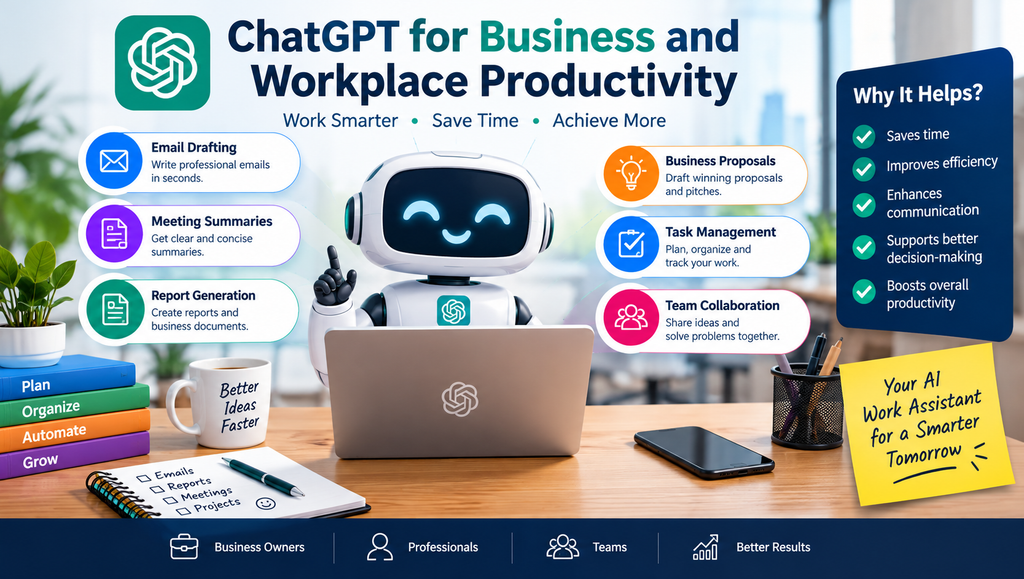
ChatGPT for business can simplify routine workplace tasks and improve communication. Professionals can use it to draft emails, prepare business proposals, summarize meetings, write reports, and organize project plans. These applications help employees spend less time on repetitive writing and more time on important responsibilities.
Businesses can also use ChatGPT for brainstorming, employee training materials, workflow optimization, and strategic planning. For example, a small business owner can request a weekly task plan or a customer communication template. Sensitive company information should be handled carefully, and important business decisions should always involve human judgment.
ChatGPT for Marketing, SEO, and Social Media
Digital marketers can use ChatGPT to develop content marketing strategies, generate social media posts, create email campaigns, and brainstorm advertising ideas. It can suggest Facebook post topics, Instagram captions, YouTube descriptions, and promotional messages for different audiences.
Another useful application is SEO planning. ChatGPT can help organize keyword clusters, understand search intent, create content calendars, and draft backlink outreach emails. These ChatGPT Use Cases support marketing productivity, but keyword opportunities, competitor information, and search performance should be checked with reliable SEO tools and current data.
ChatGPT for Education and Student Learning
Students can use ChatGPT as a learning assistant for understanding difficult subjects, preparing for examinations, and organizing study sessions. It can explain mathematical concepts, simplify science topics, summarize lecture notes, and generate practice questions. Students can also create flashcards and revision schedules for better preparation.
Teachers can use ChatGPT to develop lesson plans, classroom activities, quizzes, and educational examples. Language learners can practice grammar, vocabulary, translation, and conversation. Instead of copying answers without understanding them, students should use ChatGPT to learn the reasoning behind a solution and complete assignments according to their institution’s academic rules.
ChatGPT for Research, Information, and Data Analysis
Researchers and professionals can use ChatGPT to brainstorm research topics, develop research questions, outline reports, and summarize lengthy documents. It can also help organize literature review notes and explain unfamiliar terminology. These features make research tasks easier to structure and understand.
For data analysis, ChatGPT can assist with spreadsheet formulas, interpret tables, identify possible trends, and explain statistical concepts. However, its analysis should be checked against the original data, and important claims should be supported by trustworthy sources. Researchers should independently verify citations, calculations, and conclusions before relying on them.
ChatGPT for Coding and Software Development
Developers can use ChatGPT to generate code examples, understand programming concepts, troubleshoot errors, and improve existing scripts. It supports tasks involving languages and technologies such as Python, JavaScript, HTML, CSS, and SQL. Beginners can also ask for step-by-step programming tutorials.
Experienced developers may use ChatGPT to draft documentation, refactor code, create test cases, or explore API integration approaches. Although these ChatGPT Use Cases can improve developer productivity, generated code may contain errors or security weaknesses. Testing, code review, and secure development practices remain essential before deploying software.
ChatGPT for Customer Service and Communication
ChatGPT can help customer support teams prepare responses to common questions, draft complaint replies, and create frequently asked questions. Businesses can use it to develop consistent communication templates and summarize customer feedback. These applications can make customer service more organized and efficient.
It can also assist with professional emails, multilingual communication, and personalized message drafts. For example, an online store can prepare a polite response to a delayed delivery complaint. Human representatives should review sensitive cases, protect customer information, and handle complicated issues that require empathy or business-specific judgment.
ChatGPT for Creativity, Brainstorming, and Content Ideas
Creative professionals can use ChatGPT to generate business names, slogans, blog topics, video scripts, podcast outlines, and storytelling ideas. It can offer different approaches when someone feels stuck or needs fresh inspiration. Users can also request ideas for presentations, marketing campaigns, and new products.
The best results usually come from combining AI suggestions with personal experience and original thinking. Instead of accepting the first response, ask for alternative ideas, different tones, or solutions for a specific audience. This approach makes brainstorming more productive and helps users develop concepts that match their goals.
ChatGPT for Personal Productivity and Daily Life
ChatGPT can act as a personal planning assistant by helping users organize daily schedules, set goals, prepare checklists, and create time-management routines. It can also suggest travel itineraries, meal ideas, budgeting templates, and practical approaches to everyday problems. These applications can make personal organization easier.
Career planning is another useful option. Users can request resume improvements, cover letter drafts, interview questions, and professional development plans. ChatGPT can also assist with language translation and self-learning. For financial, medical, or other high-impact decisions, users should verify information and consult qualified professionals when necessary.
ChatGPT for Finance, Sales, and Business Analysis
Small business owners and sales professionals can use ChatGPT to draft sales emails, develop sales pitches, prepare proposals, and brainstorm lead-generation strategies. It can also help organize customer segments, summarize sales reports, and explain business performance indicators. These tasks can support more structured sales activities.
For financial organization, ChatGPT can help categorize expenses, explain budgeting methods, summarize financial spreadsheets, and build basic cash flow planning templates. Its suggestions should not be treated as guaranteed forecasts or personalized investment advice. Always verify calculations, use reliable financial records, and consider professional guidance for significant financial decisions.
ChatGPT for Presentations, Documents, and Summaries
Creating presentations and professional documents is another practical application of ChatGPT. Users can generate PowerPoint outlines, presentation scripts, speech drafts, executive summaries, and training materials. It can also help organize lengthy documents into shorter sections that are easier to review.
Students and professionals can use ChatGPT to summarize notes, draft project documentation, prepare meeting minutes, and improve document structure. For the best results, provide the intended audience, desired length, tone, and key information. Review summaries against the original material to avoid missing important details or introducing incorrect statements.
ChatGPT Benefits, Limitations, and Responsible Use
The main benefits of ChatGPT include faster drafting, accessible explanations, creative brainstorming, and assistance with repetitive tasks. It can help users get started on difficult projects and organize information more efficiently. These advantages make ChatGPT useful for a wide range of professional and personal activities.
However, ChatGPT can produce inaccurate information, outdated details, biased responses, or convincing but incorrect explanations. Users should fact-check important claims, protect private information, and apply human oversight. Responsible AI use means treating ChatGPT as a support tool rather than assuming every answer is correct.
ChatGPT Prompts, Tips, and Best Practices
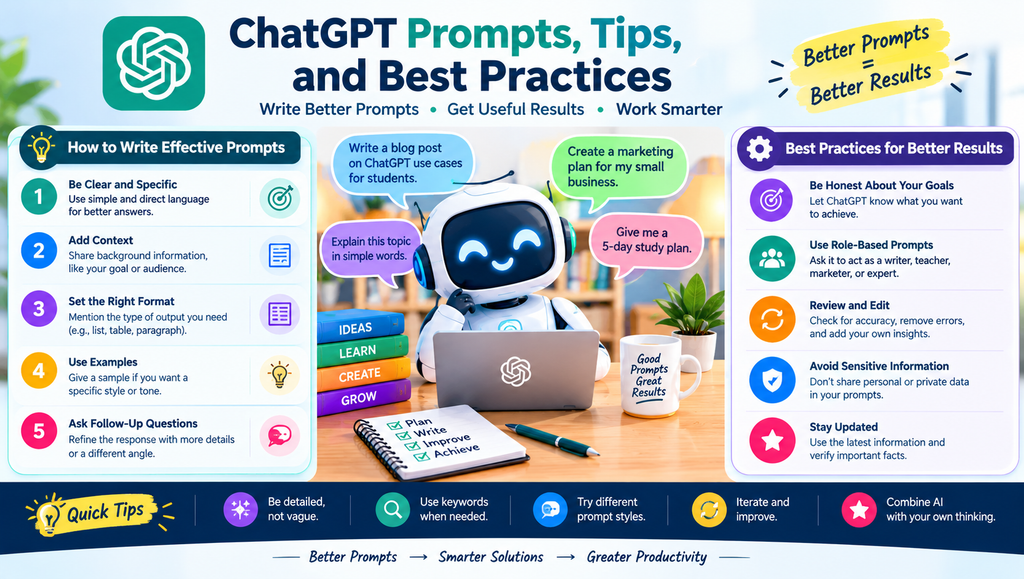
Effective prompts are essential for getting useful answers from ChatGPT. A good prompt explains the task, provides relevant context, identifies the intended audience, and describes the preferred format. For example, instead of asking for a blog post, request an SEO-friendly article for beginners with clear headings, practical examples, and a concise introduction.
You can also improve responses by asking follow-up questions, requesting revisions, and providing feedback. Role-based prompting, custom instructions, and specific requirements can make results more relevant. These ChatGPT Use Cases become more effective when users review the output, correct mistakes, and refine their prompts until the response meets their needs.
Comparing the Best ChatGPT Use Cases for Different Needs
Different users can benefit from different ChatGPT applications. Students may prioritize learning and revision, while bloggers may focus on content creation and SEO. Business professionals may find email drafting, document summaries, and project planning more valuable for their daily work.
The following table highlights useful applications and their main benefits.
| ChatGPT Use Case | Best For | Main Benefit |
|---|---|---|
| Content writing | Bloggers and writers | Faster content drafting |
| SEO and marketing | Digital marketers | Content and campaign planning |
| Study assistance | Students and teachers | Easier learning and revision |
| Business productivity | Teams and managers | Organized workflows |
| Coding assistance | Developers | Code explanations and debugging |
| Research and analysis | Researchers | Information organization |
| Customer service | Support teams | Consistent response drafts |
| Personal planning | Everyday users | Better task organization |
| Sales and finance | Business owners | Structured planning support |
| Presentations | Professionals and students | Faster outline creation |
Choosing the right application depends on your goals, available tools, and the complexity of the task. Start with a simple activity, evaluate the quality of the result, and gradually explore additional ways to improve your workflow.
See more:ChatGPT Use Cases
1. What are the most useful ChatGPT Use Cases in 2026?
The most useful applications include content writing, studying, coding, research, marketing, business communication, customer support, presentation planning, and personal productivity. The best option depends on your individual needs.
2. Can ChatGPT help improve productivity at work?
Yes. ChatGPT can assist with drafting emails, summarizing meetings, preparing reports, organizing tasks, and brainstorming solutions. Reviewing its output helps maintain accuracy and professional quality.
3. Can students use ChatGPT for studying?
Yes. Students can use it to understand concepts, create revision notes, practice questions, learn languages, and prepare for exams. They should follow academic integrity rules and make sure they understand the material.
4. Is ChatGPT reliable for research and factual information?
ChatGPT can help organize research and explain topics, but it may produce inaccurate or outdated information. Verify important facts using trustworthy sources and check references before citing them.
5. How can I get better results from ChatGPT?
Write clear prompts, provide context, specify the desired format, and explain your goal. Ask follow-up questions when needed, and review the final answer for accuracy, relevance, and completeness.

